Posts

No Claim Bonus (NCB) OR No Claim Discount

Image
No Claim Bonus (NCB) OR No Claim Discount NCB is offered at the time of a car insurance renewal. Clients benefit if they do not claim in a policy year. This discount off your comprehensive premium. On each renewal, your NCB or discount will increase providing you haven't made any claims that affect your NCB. If you are eligible, your NCB will keep increasing until you reach the maximum discount level. Your NCB is shown on your certificate of insurance. The no-claim bonus is a reward to the vehicle owner for prudent use of the vehicle. For example, if you sell a 10-year old car and purchase a new car, the no-claim bonus will pass on to the new vehicle and you can save considerably on your insurance costs. It can be transferred to another insurance company subject to evidence in the form of a renewal notice or letter, confirming the NCB entitlement from the previous insurer. NCB is not calculated on your entire insurance premium amount. It is not applicable for third-party car in...


Legal liability in the case of motor Car Accident

Legal liability in the case of motor Car Accident Liability refers to the person or party who has caused an accident and is legally responsible for the damages. Liability can be assigned to a driver, a passenger, the owner of a vehicle, or other parties. When determining liability, courts examine all facts of the case and decide on account of negligence. Simply put, “liability” in an auto accident means fault, as in, whoever is responsible for the accident is the at-fault or liable party. Liability may be simple a drunk driver running a red light and crashing into another car, for example. When your insured car is involved in an accident in which a third party suffers damages, you are legally liable to pay for those damages. If your vehicle is equipped with a car insurance policy, the third-party liability cover under the insurance will fulfill the legal requirement of compensating the victims. Common types of car accidents include: -Rear-end collisions -Intersection accidents -...

A Cession

Image
A Cession Cession refers to the portion of insurance policies or portfolio which are transferred to a reinsurer. This allows the ceding company to reduce its exposure, so that risk is distributed among two or more companies instead of falling upon a single insurer. Transferring risk to a reinsurer can take place in two ways proportional or non-proportional; -Proportional reinsurance is an arrangement where the insurer and reinsurer share a percentage of the premiums and losses. -Non-proportional reinsurance only requires payment from the reinsurer if losses are above an agreed-upon amount. Currently, the insurance industry has become more complex due to high competition among the insurance companies. In this regard, reinsurance provides an opportunity for both the insurer and reinsurer to share benefits and losses based on the accurate actuarial calculations that determine the loss or risk incurred. The primary insurer essentially sub-contracts portions of responsibility for the c...

CLAIM PROCESS

Image
CLAIM PROCESS An insurance claim is a formal request to your insurance provider for reimbursement against losses covered under your insurance policy. It acts as a safety net against financial losses. You must be the legal beneficiary to claim. The claim, step-by-step process is simple; -The first step in processing a claim is reporting the claim to the insurance company through your agent or broker, so they should understand your situation and how to proceed. -Claim investigation begins. -Your policy is reviewed. -Damage evaluation is conducted. -Payment is arranged which is the claim settlement. Where the policyholder claims financial support from the insurer. In case of life assured’s demise during the policy tenure, the nominee lodges a claim in order to receive the death benefit. In casualty and property insurance these four elements are necessary for a successful claim: -duty -breach of duty -causation, -damages. The claimant is oblige to approach the insurer to de...

Death Benefit

Image
Death Benefit It is the amount of money your insurer will pay out to your beneficiaries if you die during the policy's term. A death benefit is the primary reason someone purchases a life insurance policy; It is the amount that is paid to the nominee in case of death of the life assured during the policy period. It is payout to the beneficiary of a life insurance policy, annuity, or pension when the insured or annuitant dies. This predetermined amount of money typically is tax-free and can be paid out all at once or in payments over time. The cost of your policy is determined by factors like your age, medical history, policy type, and the face amount you select. The greater the face amount, the higher your premium. Remember, death benefit and sum assured are no similar terms. This is because the death benefit can be equal or higher than the sum assured as it can include the rider benefit as well. If an estate exists, the executor named in the will or the administrator named ...

REVIVAL PERIOD

Image
REVIVAL PERIOD The revival period is the span of time offered by the insurance company during which the policyholder can reactivate a lapsed policy. Once the revival period is over the policy can never be re-activated even if the policyholder wants to pay all the premium payments that are due. However, the re-activation process must be completed within a specific period of time after the grace period ends. This period is known as a revival period. During the revival period, the policy is reinstated on the basis of certain conditions. In one case, the policy holder needs to pay the interest along with the unpaid premium. In another case, the policy holder needs to undergo medical tests in order to reinstate the policy. Usually life insurance policies have a revival period of 2 consecutive years since the policy has been lapsed. Under the revival period the policyholder can revive the life insurance policy by making the due premium payment along with applicable charges. For example;...

MATERIAL DAMAGE POLICY

Image
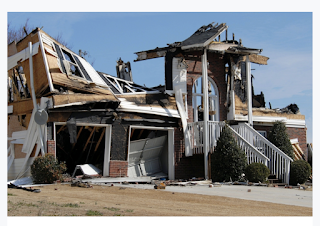
MATERIAL DAMAGE POLICY The policy covering damage to property (usually a commercial fire policy) as the result of which damage a business interruption claim may result. It is a condition of business interruption insurance that a material damage policy must be and remain in force. The purpose of Material Damage insurance is to reinstate the asset lost or damaged, as it was if no fire or other insured event had occurred. The insured may elect not to reinstate and can negotiate a financial settlement, which would reflect a depreciated reinstatement value. Material Damage insurance is subject to a deductible. This means that before the policy will respond the loss must exceed a pre-agreed amount. However the deductible vary between policies and insurers for a number of reasons: -Previous claims experience -Business activities -Building construction/location Three common exclusions to a Material Damage policy are: -Terrorism -Electronic Data -Building Defects Material damage pol...