Posts

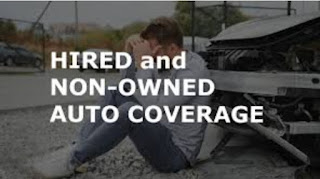
Hired And Non-Owned Auto Insurance
Image
Hired And Non-Owned Auto Insurance Hired and non-owned auto insurance (HNOA) is a type of insurance for small business owners who rent or lease vehicles, or ask employees to use their personal vehicles for business purposes. This includes: 1-Rented vehicles: When a company rents a car or truck for business purposes, HNOA insurance can cover any liability arising from an accident while using the rented vehicle. 2-Leased vehicles: Similarly, if a business leases a vehicle for work, HNOA insurance can offer coverage for accidents and any associated legal expenses. 3-Employee personal vehicles: In some cases, businesses might allow employees to use their personal vehicles for work-related errands or tasks. HNOA insurance kicks in if an employee is involved in an accident while driving their personal car for business purposes and their personal insurance policy is inadequate or doesn't provide coverage. If you or an employee gets into an accident while driving a leased, rented, or ...

Certificate of Liability Insurance

Image
Certificate of Liability Insurance A Certificate of Liability Insurance (COI), also known as a general liability insurance certificate or proof of insurance, is a document issued by an insurance company that verifies the existence and details of an active liability insurance policy. It serves as proof to a third party that a business or individual has the required insurance coverage. It summarizes the key elements of your policy or multiple policies, assuring prospects and customers that your business is protected from common risks. Insurance companies provide certificates of liability insurance for a variety of small business insurance policies, including: -General liability insurance -Business owner’s policy (BOP) -Commercial auto insurance -Errors and omissions insurance (E&O) -Professional liability insurance -Workers' compensation insurance -A COI does not constitute the actual insurance policy and doesn't guarantee coverage for any specific claim. It merely ver...

Risk Attaching

Image
Risk Attaching It refers to a specific term used primarily in reinsurance contracts. It defines the trigger point for when the reinsurer's responsibility to share losses with the ceding insurer (the primary insurer) begins. Risk attaching determines at what point the reinsurer becomes financially responsible for covered losses under the reinsurance agreement. A reinsurance contract specifies its period of effect: date of inception and date of termination. but the period during which the treaty produces its effects is not to be confused with the period of coverage. The period of coverage determines the period during which the reinsurer will be responsible for the claim arising from policies or risks ceded during the period of effect of the treaty. this period of coverage might be loss occurring, risk attaching or accounting year. Unlike loss occurring, which focuses on when the actual loss event takes place, risk attaching is forward-looking. It focuses on when the policy is...

Personal & Advertising Injury

Image
Personal & Advertising Injury Personal and advertising injury is typically an infringement on a person or business’s personal or intellectual rights. This type of coverage is included in most commercial general liability (CGL) insurance policies. It protects businesses against financial losses arising from specific non-physical injuries caused to others, typically through their actions, publications, or advertising. These injuries are distinct from physical harm or property damage. 1) Personal injury liability typically covers legal costs and damages awarded in lawsuits alleging: -Libel: False written statements that harm someone's reputation. -Slander: False spoken statements that harm someone's reputation. -False arrest: Wrongful detainment by law enforcement. -Malicious prosecution: Initiating legal proceedings without probable cause. -Invasion of privacy: Unlawful intrusion into someone's private life. -Wrongful eviction: Removing someone from their property i...

Uninsured and/or underinsured bodily injury coverage

Image
Uninsured and/or underinsured bodily injury coverage This is a coverage which may protect against drivers without insurance, and/or drivers with insufficient policy limits to reimburse you for damages they caused. This coverage typically pays the difference between the amount recovered from the other driver and the amount of the damages, up to the limit of the policy. 1) Uninsured Motorist: If you're in an accident with a driver who doesn't have any liability insurance and they are at fault, UMBI coverage can help pay for your medical bills, lost wages, and pain and suffering. -This is especially important because driving without insurance is illegal and unfortunately, some people still do it. 2) Underinsured Motorist: If you're in an accident with a driver who has liability insurance, but their limits are not enough to cover all of your medical expenses, UIMBI coverage can help pay the difference. -This can happen even with seemingly responsible drivers, as medical ...

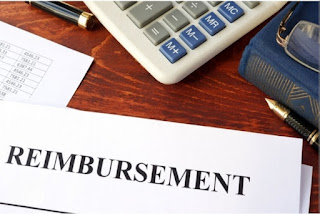
Reimbursement

Image
Reimbursement This is often related to health insurance, reimbursement is the payment by an insurer of the expenses actually incurred and paid by the insured as a result of an accident or sickness, but not to exceed any amount specified in the policy, and covering only those expenses noted in the policy. Reimbursement is usually based on receipts. Reimbursement may happen in two main ways: 1. Direct Reimbursement: -You pay for covered expenses upfront (doctor's visit, medication, repair work, etc.). -You submit a claim to your insurance company with receipts and other documentation. -The insurance company reviews your claim and reimburses you for the allowed amount, based on your policy coverage and limitations. 2. Network Reimbursement: -You utilize healthcare providers or services within your insurance company's network. -The provider bills the insurance company directly. -You may be responsible for a deductible, copay, or coinsurance depending on your plan Here are so...

Insurance Quote

Image
QUOTE A quote is an estimate of what you’ll pay for insurance from a specific insurance company. A business insurance quote is an estimate of what an insurance company will charge you for a certain kind of insurance protection. Requesting quotes from multiple insurers will help you find a reasonable deal. Here is a breakdown of what an insurance quote typically includes: the type of insurance, the amount of coverage, the premium, deductible, discounts, exclusions. In most cases nowadays, several quotes are requested and delivered online, and a licensed agent can provide guidance before you make a purchase, if needed. Before the advent of online business model to request for a quotes you may: -Call agents who represent a single company, also known as captive agents, and request quotes for the insurance you’re interested in buying -Call an independent agent (an agent who represents multiple insurers) and ask him or her to shop the market for you -Ask an insurance broker (a professi...